Article published in The Wiltshire Gardens Trust Journal 


For the next three years I will be juggling my work as a freelance horticulturalist with a busy family life whilst studying for The Royal Horticultural Society Master of Horticulture course. When I tell people that I am studying towards the MHort - that for three years I will be submitting essays and reports, completing assessments, sitting exams and, eventually, writing a dissertation - some think that I am truly mad. Most, however, are very supportive. They can see that horticulture has become my passion, not just a job but a vocation, and it is to these people that I am very grateful.


Wisley in early October 2017


 Embarking upon the MHort course is rather challenging when the previous academic essay I wrote was a decade and a half ago. Luckily it appears that most of my peers are in the same boat, some have never written an academic piece of writing at all before. The launch weekend at the beginning of October 2017 was, in equal parts, inspiring and terrifying. A group of about sixteen of us were welcomed at RHS Wisley by the team of tutors. This was only about half of the 2017 cohort, other MHort students are located in far flung corners of the planet. There are students from South Africa, Canada, Seychelles, USA, Hong Kong and Singapore, to mention but a few.

To be a student at Wisley is quite awe inspiring - even if it is only for a few days per year. Not only is it a wonderful garden, full of year-round interest but my fellow MHort cohorts and I enjoyed a weekend in the company of some of the finest contemporary horticultural minds. Our tutors for the next three years include a lecturer from the prestigious Department of Landscape at the University of Sheffield, a horticulturalist named as one of the 100 most influential people in Garden Retail in the UK and two lecturers from Writtle University College.


We have access to the tutors and other MHort students via an online Virtual Learning Environment (VLE) – a kind of Facebook for horticulturalists. All of our work is submitted via the VLE and we can send messages privately or post publicly on a forum. The tutors will often reply to our queries within hours. This kind of mentorship is exactly what I was looking for in my career. I have been self-employed for eight years, having spent my earlier horticultural career working in public and private gardens. I started out at Highgrove at the impressionable age of 15 when I applied for, and successfully got, a couple of weeks summer work experience in the garden. I worked there during the summer holidays for a number of years after that, in between gaining qualifications in Fine Art, Design and Photovisual Studies followed by an HND in Organic Horticulture from Pershore College and Worcester University. I was incredibly lucky to spend my sandwich year working in Sting’s organic garden, Lake House, near Salisbury. Positions at The Abbey House Garden, Malmesbury and Cole Park followed.


Self-employment has allowed me flexibility while, with the help of my husband, I bring up my young children. It has also encouraged me to grow as a horticulturalist, fuelling my passion for horticulture, particularly organics and sustainability, planting design, topiary and organic fruit, vegetable and cut flower production. Recently I found myself searching for new challenges. I want to be able to successfully convey my passion for horticulture as a way of life, not simply a job, to more people. I think that undertaking and achieving the RHS Master of Horticulture qualification will give me greater authority and more confidence to realise my ambitions within the horticultural industry. It has already provided me with the community that I felt I lacked since becoming freelance. I have missed the camaraderie of the mess room in a large garden. I feel that I now have that back! My fellow MHort candidates and I will only meet up once or twice a year but their support via the VLE is invaluable.
It has been a good year for carrots in the garden of one of my clients

As soon as I found out that I had been awarded a place on the Royal Horticultural Society’s prestigious Master of Horticulture course I knew that I needed a little extra help. Together with the generosity of one of my clients, this help has come from The Wiltshire Gardens Trust who have awarded me a grant to cover the cost of a new computer with all of the relevant academic software plus a further annual grant to help with the books and other expenses that I will need to ease my journey on this adventure. I am thrilled to have this opportunity and I am determined to do it justice.


I am under no illusions that it is going to be easy. This is mainly a distance learning course so candidates must be self-motivated and disciplined with their time. I am having to adapt to evenings in front of the computer or reading through journals after my children are tucked up in bed. What is most surprising is how much I am enjoying these evenings. I was worried that I would find academia, and the slightly drier topics of management and funding, hard to settle down to but because they relate to the larger subject of horticulture I am finding all it remarkably scintillating! I am also aware that, at the time of writing this article, I am only two months into the course and there are plenty of long nights of studying in front of me.


I am most of the way through the first unit of eight. This unit is titled ‘Horticulture Now’ and three essays must be completed to the required standard in order to progress to the next unit. We have been asked to study the horticultural industry in general and analyse some of the different organisations that influence it, to understand and articulate the wide-ranging benefits of horticulture on society and discuss different external factors that affect horticultural organisations. The tutors are looking for an understanding of the contemporary horticultural industry, an ability to articulate this understanding and a capability to use a range of sources of information and evidence it in the correct academic manner. I am looking forward to units titled ‘Horticultural Research and Development’ and ‘Sustainable Horticulture’ and not looking forward so much to units titled ‘Operational Management’ and ‘Business Growth’. I am keeping an open mind and I am prepared to work even harder at the subjects that do not come naturally to me – who knows? I may surprise myself!


Along the way there will be online tests and something scarily titled the ‘Applied Knowledge Assessment’. It all culminates with a dissertation conference and the submission of a dissertation. Just writing these words fills me with a mixture of fear and excitement! This is an inspiring start to the rest of my horticultural life.


Notes from a Head Gardener ~ Chapter 9 ~ Tying knots with gloves on

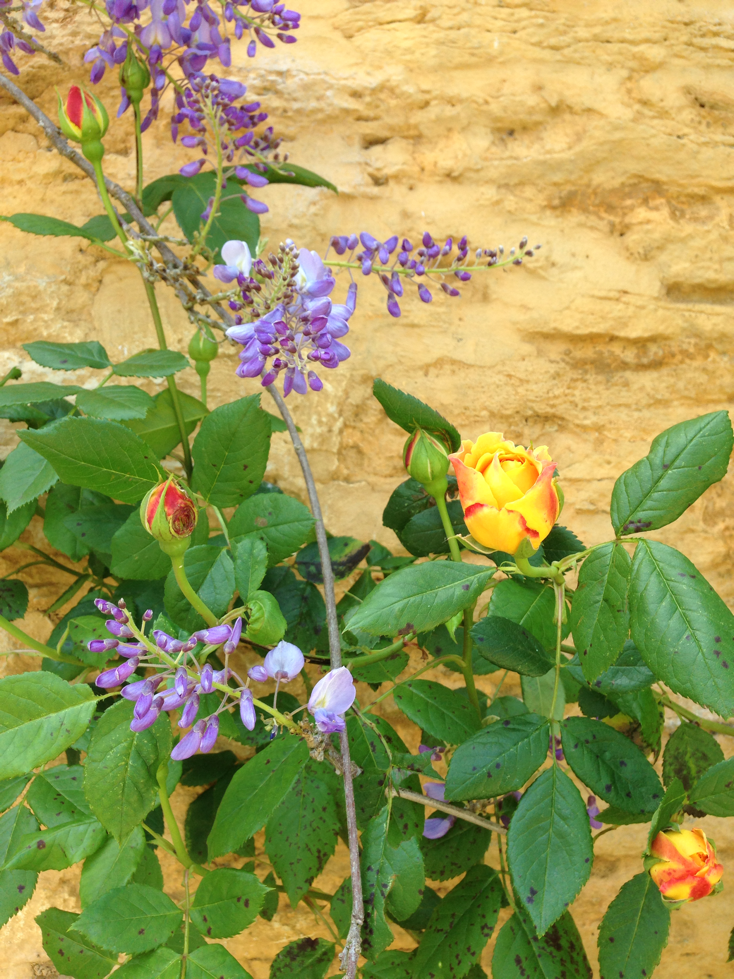
Rose pruning. Of all the garden tasks this is one of the most satisfying. I enjoy a puzzle. To take a jumble of stems and train them into a pleasing and ultimately floriferous form is immensely rewarding. 

With every year that passes, my adoration of the rose multiplies. 


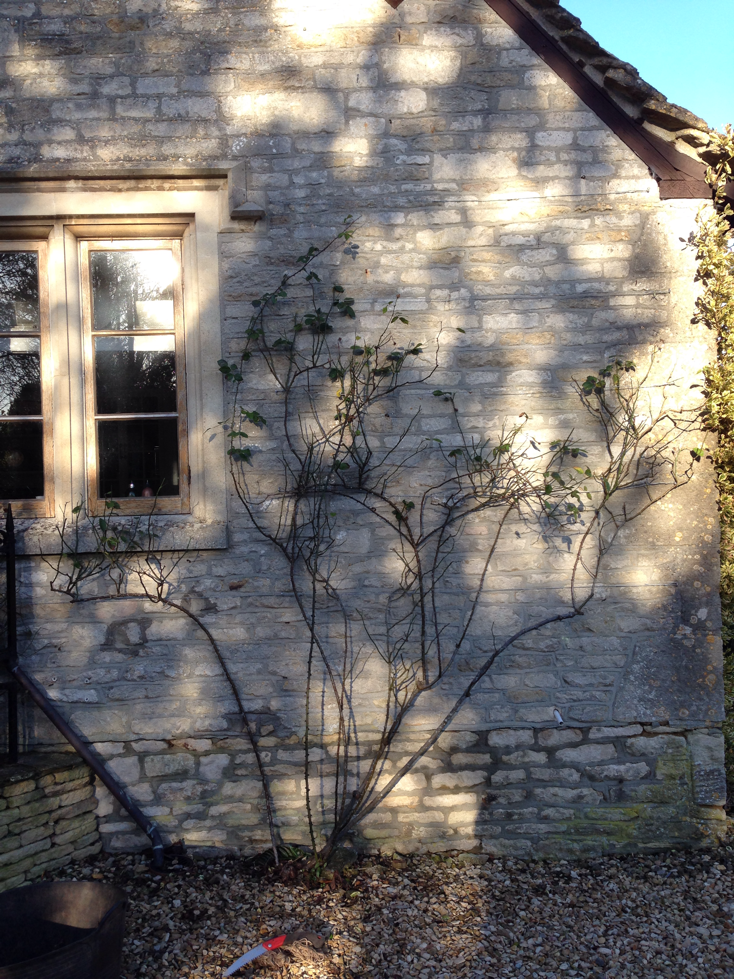
A thorny mess......


........becomes an attractive arrangement......


......with just a pinch of knowledge, a few moments of thoughtful invisioning, several clean snips and careful tying-in. Without the bitter wind it would take but twenty-five minutes. With the unfriendly breeze, seemingly straight from Siberia, it took rather longer. My knots were clumsily tied because I could not bring myself to remove my gloves. It was of no consequence. The rose was successfully pruned and trained and my fingers remained toasty in my favourite winter gloves. A happy day indeed! 


Notes from a Head Gardener ~ Chapter 8 ~ All is quiet at www.nicolahope.co.uk

All is quiet on the blogpost front and I have the most marvellous excuse. I am a Royal Horticultural Society Master of Horticulture candidate. In three years time, if all goes to plan, I will be able to put the letters MHort after my name. 


Far more important than the letters is the knowledge, authority and confidence that this course will afford me. Three months in and I am surprised by how much I am enjoying academia again! The first unit, 'Horticulture Now', has sent me diving head first into research on the benefits of horticulture. The benefits are many fold. Health, both physical and mental, can be greatly improved by getting involved in gardening or even just being surrounded by green spaces. 


Reading the research is reinforcing what I already know. Being involved with horticulture on a daily basis is life enhancing. Take today for instance. A cold, dark January day. Not the most inviting, yet a few hours of rose pruning and a break in the clouds meant that by the end of my working day I was almost skipping. I cannot think of an another industry that I would rather be employed in. The Master of Horticulture course is the icing on the cake.......or rather, the hoar frost on the seed heads. I will be working my steel toe cap boots off to do the very best that I can. 


I will be blogging as much as possible. I hope that I will be so used to researching and writing that, after my course is completed, nothing will stop me spreading the horticultural word. 


Notes from a Head Gardener ~ Chapter 7 ~ The perfect garden.....almost

South Wood Farm near Honiton in Devon is a pocket powerhouse of a garden. It appears to have a little bit of everything ~ a stunning 17th century farmhouse as a focal point, a setting in a lush and peaceful valley, fabulously colourful planting in a walled courtyard, a collection of neatly clipped, many-sized topiary, a productive vegetable garden complete with sparklingly modern but traditionally styled glasshouse and coldframes, nuttery, rippling pond complete with resident frogs.....practically perfect in every way.....almost!


My visit to South Wood Farm was six weeks ago and I have been trying to write about it ever since. The problem is not what was there - the garden was stunning - there were just a couple of elements missing. My overriding feeling as I left the garden was that I had just experienced a tour of a cleverly and sensitivity designed stage set. 


Every section of the garden flowed seamlessly to the next and elicited "oohs" and "aahs" from us all at every turn. Immaculate vistas, attention to detail and use of local and rural crafts, accomplished planting and sensitively managed horticulture......but where were the surprises? The quirks? The cheekiness that makes the greatest gardens even greater? 


I really enjoyed the garden for what it was. I could appreciate the hard work and accomplished skill of designer Arne Maynard and Head Gardener Will Smithson and I would adore to spend my days working in such a gorgeous garden but I think that the anarchist in me would be itching to create at least a couple of surprises ~ a contemporary sculpture juxtaposed with traditionally clipped yew or a piece of graffiti art in the beautifully Instagrammable potting shed or against an ancient stone wall. Perhaps some unpredictable planting or an unanticipated statement plant would throw the visitor out of the fairytale trance and conjour an amused smile. Perhaps it needs the stamp of the owner to be more prominently stamped. 


When you adore a garden so much that you really want to drop everything and work there for no wage today but, at the same time, want to twist and manipulate some of it's perfectness..... what is that? A garden that is a whisker away from being truly great. I look forward to visiting again to see how South Wood Farm has developed. It can only get more impressive 


Notes from a Head Gardener ~ Chapter 6 ~ On the importance of garden visits 12/9/2017

Making the time to visit gardens a few times a year is of vital importance to a professional gardener. It is not always easy to fit it in, especially during the busiest gardening months but, even if you leave your garden kicking and screaming and in the foulest of moods, I can guarantee that most garden visits will replace time lost with inspiration and bring a fresh eye to the gardens in your charge. 


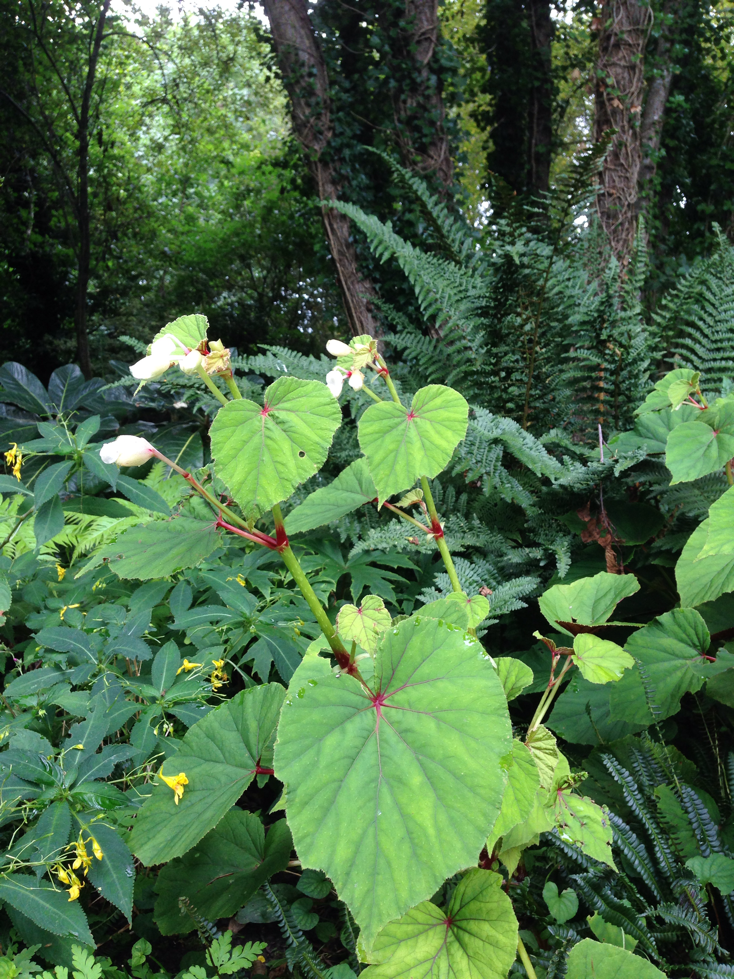
Last month I was very fortunate to be invited along on a jolly down to Devon to visit two mindblowingly different gardens. We spent the morning at Little Ash Bungalow ~ a paradise of rare, unusual and excitingly new plants, this garden is the site of a well loved collection belonging to Helen Brown. Helen is truly passionate about collecting all the plants that excite her. This could result in a garden that lacks flow but simple landscaping and a particular liking for purple foliage conspire to lead the eye around the garden. Of course, anyone visiting with any plant knowledge will be drawn towards the exciting plants. I was particularly enamoured of the woodland area towards the bottom of the garden. It is wonderfully damp down there. Perfect for many ferns, gorgeous Roscoeas......


.....and fabulous, hardy, shade loving Begonias! I have finally met a Begonia that I could get along with.......


Helen was welcoming and generous with her extensive knowledge. The horticultural world is populated with such people. The willingness to share is heartening and motivating. It is why I know that I will always be a part of the horticultural world and I will strive to retain as much knowledge as I possibly can so that I, in turn, can pass it on. 


The iridescent species Dahlia merckii glowing in the garden at Little Ash Bungalow. 

The second garden that we visited deserves its very own blogpost but here is a sneaky taster of the spectacle that we were treated to after lunch.....


Notes from a Head Gardener ~ Chapter 3 ~ The Big Smoke 25/6/2017

Competition Winner! That was me this week. I won a ticket to The House and Garden Festival out of the blue (well, I did enter a competition but one does not expect to win) and had two days to organise a day trip to London. I was undecided whether or not I would go right up until the last minute. I had a free day but, as we all do at this time of year, I had hundreds of tasks in and around the garden that I really ought to prioritise. But shouldn't one make inspiration a priority?


Prospective inspiration won. I hopped on a train and headed solo towards The Big Smoke. London is inspiring in itself for a country dweller and I have resolved to go much more often. It is easy, when one has a business and young children, to dedicate all of ones time to only these pursuits but a break from the norm is important. The show was sumptuous - divided by two separate floors - the ground floor dedicated to interiors, fashion and gifts and upstairs, a space for growers, garden designers, craftspeople and outdoor innovations. 


Talking with people who have a strong belief in their product or service is brilliant because their enthusiasm is contagious. Showing a professional interest in the stand holders is a good thing to do because one gets professional interest in return. A mutual confidence boosting exercise.


The truth is that I have made the journey to London twice in this past week. The first trip was for non-horticultural reasons (Guns n Roses you rocked!) but a chance meeting with a delightful and very trendy journalist / Instagrammer made the mini-break even more special. Alice Vincent, otherwise known as @noughticulture, was extremely sweet and full of spot-on tips to help this country mouse discover some of London's lesser known horticultural gems. I was particularly taken with the planting at the Olympic Park in Stratford. The plants were flowering well in advance of anything in the Cotswolds. It was rather like being abroad......but only an hour or so away by train. This bumpkin is suitably inspired. 


Introducing Aubrey the Leveret ~ The Cirencester Town Council and Tourist Information Centre small hare ~ 20/6/2017

This is Aubrey the Leveret. He is Lavender the Fosseway Garden Centre Hare's little brother and he is living in Cirencester Tourist Information Centre this summer on The Cotswold Hare Trail 2017. 


Aubrey the Leveret is sponsored by Cirencester Town Council. They wanted me to endeavour to show the connection between the town and its lovely, green open spaces. I hope that I have managed to capture some of the bustle of Cirencester Town and the wilderness of its surroundings. 


Aubrey has a scene of Cirencester Farmers Market on his rear. The impressive architecture of Cirencester's historic centre is depicted including the stunning Church of St. John the Baptist. The market is packed full of delicious wares and happy shoppers (there is even a tiny leveret hidden amongst the stalls). 


The market scene merges into wildflowers. There are native ferns, wild geraniums, forget-me-nots, cowslips, bluebells and the star of the show, depicted on Aubrey's front legs, the Southern Marsh Orchid. All of these beautiful plants can be found amongst the open green spaces of Cirencester and it's surrounds. 


As a horticulturalist and an artist it is very important for me to promote the special areas where these wildflowers can be found. The very observant might even spot one of our stunning native orchids. Green spaces and all the flowers that dwell in them support lots of wildlife including hares. 


I have been thrilled to support The Cotswold Hare Trail 2017. It is a great way to see parts of the Cotswolds that may be previously unknown to you and a wonderful way to get young people excited about destinations both historical and modern.