Ruminations: Spring 2015

Tag line: I'll never top the success of Swamp Donkey so I'm not going to even try. 

I haven't written anything apart from 'To do' lists in over 1 month. I could fib and say that this is because it is March, one of the busiest gardening months, Spring is happening....right now.....stare at your garden for long enough and you will actually see it unfurling before you.....I have signed up for an exhibition of my visual work (a mishmash of doodles, photographical botanical studies and whimsy) 


so I am producing like there's no tomorrow. It is a lie. Well it's partial truth but the real reason that I haven't been able to write is that I got such a thrill out of writing 'Swamp Donkey' that I didn't know how to follow it. So that's it. Two distinct time zones: Before Swamp Donkey (BSD) and After Swamp Donkey (ASD).  

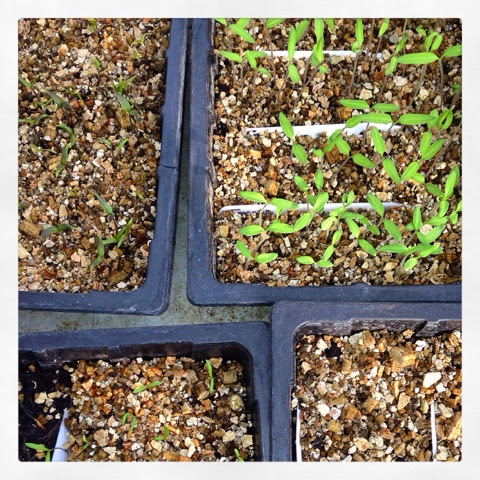
I am hoping that, by posting this, I will get over my ASD slump and jolly well get on with sharing my thoughts on Spring 2015. And while I ruminate further ~ here is a pretty, springy photograph from a pretty springy morning last week. 


Swamp Donkey

The exact origins of Swamp Donkey have been lost as time has passed but it is believed that she was discovered in a field near Salisbury in around 2002. 


Swamp Donkey appears annually in approximately November and can be sighted regularly through the winter months. If the winter is followed by a soggy spring and summer then Swamp Donkey may stay throughout the year. 

Swamp Donkey is not easily spotted on a grey, muddy day because she is usually camouflaged i.e. covered from head to toe in mud. 


This problem was partially rectified in Autumn of 2014 with the purchase of bright pink Wellington boots - however on the wettest, coldest days these are of no use to those who wish to find Swamp Donkey because they are probably up to 85% obscured by waterproof trousers. 


In this picture - a rare sighting of Swamp Donkey, captured in a Cotswold glasshouse - she can be seen wearing the famous Wellington boots (bright pink flash only just visible near the sole), thick waterproof trousers, knee pads, padded winter coat with a holster for secateurs seen circling the waist, a woolly hat and a goofy smile. The gloves are missing - maybe they are already sodden and drying out on a radiator somewhere. 

Swamp Donkey is a simple creature. As long as she has access to a regular supply of dry clothes and plenty of chocolate based snacks she will carry on regardless of adverse weather. 

However, even Swamp Donkey knows that sometimes it is just too wet / frozen / windy to garden because she will cause more damage than good. 

Be kind to Swamp Donkey - she may look like a hobo but she is very approachable and generally knows what she is doing.  


EBTS ~ The European Boxwood and Topiary Society

My dedication to the art of topiary can be traced back to the last year of the last century. 


The late and completely great Rosemary Verey was enjoying a high-summer garden visit to Highgrove. She entered The Black and White Garden (previously The Rose Garden, which she helped HRH The Prince of Wales design; presently it is known as The Sundial Garden) only to discover two rather sweaty teenage girls clipping away at the formal box parterre hedging. Instead of being appalled by the girls' dishevelled pinkness she bellowed (not unlike an old-school riding teacher) "Great clipping girls!!!". I was one of those girls. 


Golly gosh - a compliment from a gardening legend and Cotswold queen. 

That compliment made my lifetime and cemented what I really already knew - I had a knack for this topiary lark.....a bit of an eye for it. This is going to sound more than a little bit strange but I seem to be able to see the potential in an un-clipped bush or tree and in a few swift snips of my shears that form in my mind starts to become a reality. 


I have received many compliments about my topiary since but none has meant so much as that first one. 

So why did it take me so long to find a society full of similarly obsessed topiary geeks?!


I discovered The European Boxwood and Topiary Society in an article in the RHS monthly members journal 'The Garden' - I looked it up on the spot and promptly asked for a subscription for Christmas. 

When the membership package arrived I couldn't have been more thrilled - not only did they include two past journals for my reading pleasure but they also enclosed a members list that reads like a Who's Who of horticulture - designers, nurserymen and women and dignitaries. I was hooked. 


I am yet to attend any outings or meetings (having young children tends to limit away days to more brightly coloured, flashy lighty excursions - although my girls are rather partial to a seasonal Sunday afternoon open garden......as long as there is cake and squash) but I fully intend to make the most of my membership and to learn everything I possibly can from my fellow members - men and women who have made horticulture their life. I bet they're pretty cool people. 


Armed to the teeth

Organic or conventional horticulture ~ my internal war and external battles. 

Confession - My name is Nicola Hope, Organic Horticulture HND and former trainee at two prestigious, fully organic gardens - Highgrove and Lake House......and now regular user of really nasty Ultimate Bug Killer-Very-Definitely Not-Organic spray in the glasshouse. 

So now you know, but please don't tell Prince Charles or Sting. 

I didn't want to do it
They made me do it
They drove me to it
I just cannot get rid of the mealybugs. 


I have tried everything else, honestly I have, but they're still there and, what's worse, they're breeding, spreading, sucking the life out of the resident Bougainvillea and absolutely, well and truly not shifting. 

I imagine that they laughed at my organic control efforts, wrapped up behind their little fluffy shields. 

I have tried physically wiping them off with white spirit; purchased biological control called Cryptolaemus montrouzien - funny little beetles, which are supposed to find mealybugs irresistibly delicious. These ones didn't seem remotely interested...... and then died. 


I tried blasting the mealybugs off the plants using a water jet but, there they remained, laughing at me like tiny woolly sheep, happily continuing to munch on the Bougainvillea, wall-trained pelargoniums, Passiflora, mimosa and a poor old peach tree. 


I would never have thought to go down the conventional control route but an experienced (much older..... no, wise) professional gardener advised me that the only way I would get rid of the mealybuggers was repeated use of Provado Ultimate Bug Killer. 

Last year I made rubbishy little irregular efforts at killing the mealybugs with the chemical spray - safe to say that this didn't work either. The tiny sheep creatures were still there munching and laughing and all I felt was guilt that I was using chemicals. Ooh, if my lecturers could see me.....shudder! Mostly I worried about all the other beneficial insects that I would be killing alongside the pests. 

A few weeks ago I decided that enough was enough - the mealybuggers were taking control of the Westside (or, what most people would call the propagation end of the glasshouse - too many evenings spent watching 'The Wire'). What they fail to realise is that I am in charge of the whole garden and they will not win. 

So I commenced my weekly attack on the mealybuggers. I leave no leaf unturned, no wooly enclave un-blasted - I feel no more guilt.......as long as I keep my use of chemicals to this one small part of the garden. I will not be using chemicals outside of this section of the glasshouse. I refuse to completely abandon my principles. 

I still adhere to the philosophy that a garden left completely chemical-free for a number of years will eventually reach a fragile equilibrium - the beneficial plants, animals and insects will equal the undesirable weeds and pests, sort each other out and exist in a nice food-chainy ecosystem........with a little help from your local, friendly, organic gardener. 

I will still be weeding (along with half of the nation) and I will still be wielding organic slug pellets and copper barriers like Rambo wields his AK47. 


What? You didn't think that I accept that slugs and snails have any right to eat my Dahlias, did you?! Bottom left hand corner - 'Certified for Organic use'. I am allowed. 

Slugs and snails, grrrrrr, that's a whole 'nother blogpost (or 12). 

Now if I can just exterminate those mealybugs......so far......hmmmm.....I'm not sure if even big, tough Ultimate Bug Killer is having much joy. Watch this space. 

See, Your Royal Highness and Mr Sting, I haven't completely gone over to the dark side........it's just these goshdarned mealybugs!!!! 


Doodles / concepts / sketches

Leaving January glasshouse frustrations aside for a short while (see previous blogpost) - I have been drawing!

I have come up with two separate concepts for a playhouse garden set amidst a much larger, formal (grown-up) garden. 

The brief was for the 4 year old owner of the playhouse to have a garden of her very own and for it to be colourful and productive. 


Concept 1 is very much a traditional cottage garden with attractive beds containing fruit, vegetables and flowers for cutting. 


Concept 2 is based on the idea of the labyrinth whilst still keeping areas open for vegetable and cut-flower production. 

I do so enjoy coming up with design concepts and rendering them but I also enjoy a good doodle - here are a couple of my latest floral flights of fancy. 


Watering

Writing about watering is almost as difficult as watering itself. 

I have been wanting to write about watering for some time but haven't been able to find the words to express how important it is, how difficult it is, how frustrating it is, how time consuming it is and how deeply, deeply fundamental it is to successful horticulture. 


I will always say to a novice gardener that watering is the trickiest aspect of horticulture to master. 

If you do not have the time to water your garden - be it all planted out in the soil or containerised- then you must invest in a decent irrigation system. If you haven't the funds or the inclination to do this then purchase a Beth Chatto book - plan your dry garden and good luck to you. 


If you think that I am sounding a little bit cross then you are correct. 

Watering (or lack of it) is the single most frustrating aspect of my horticultural life - it even beats slugs, snails and mealybugs (grrrrr....another story entirely) to sit at the top of my list. 

I ought not to go into too much detail but what, I ask you, is the point of employing an experienced gardener to lovingly produce and nurture young plants only for these plants to be ignored at the weekend or (and this is almost as dangerous) to be left in the dubious care of a well meaning but horticulturally challenged maintenance man who knows very little about these helpless youngsters? 


This problem could be lessened by the introduction of an effective overhead irrigation system or even some relatively inexpensive capillary matting, on which the pots and seed trays filled with young plants sit - able to draw upon the moisture that the matting retains for far longer periods of time than ordinary glasshouse staging. 

I have fought for the introduction of these systems but to no avail so I must keep on putting my heart into the precarious lives of my delicate charges one week and hope and pray that they are still around the next week for me to continue to coax them into becoming sturdy and productive plants.......only the strongest will survive! 


Chilli 'Amberley' is a great example of a survivor of such inconsistent conditions. Germination rates are extraordinary and the chances are that, given the right amount of care (and competent watering) these seedlings will all reach maturity and go on to produce the most delicious fruits with a mild, tangy flavour, no real heat - just a small, sweet reminder that it is a chilli and not just an ordinary pepper. 


All I can do is try my best and leave the rest to the whims of others. 


Winter Gems

For a few weeks at the start of every calendar year I actively seek out colour in the garden. It is never immediately apparent. Winter colour never smacks you in the face. 


Occasionally a blue sky accompanied by weak winter sun will throw a new light on Sorbus berries, bright red willow branches or the ghostly pale of Rubus thibetanus stems and this is extremely heartening but it's the small displays of courage in adversity (and, let's face it, January is always adverse) that give me the most amount of pleasure. 


I have been fighting brambles and generally winning (the battle but not the war - it is ongoing and everlasting) and I have seen several tiny winter soldiers that have made me smile - snowdrops, pink Viburnum tinus flowers, Clematis cirrhosa, Witch hazel, hellebores, very early Narcissi, Crocus but the snippet of colour that pleased me the most was a glimpse of the underside of a Heuchera (I think it is 'Marmalade ') leaf. Perhaps it sent my senses reeling because of the intensity of the fuchsia bottom contrasting so wonderfully with the acid-lime topside - a combination more associated with the summer months. Or perhaps it grabbed me at just the right moment, but grab me it did and at this time of year I will take all the colour that the garden is willing to shove my way. 


So #whatsinmywheelbarrow ? 

Brambles and other undesirables and I have the battle scars to show for it. It's good work - it's physical; it's a proper fight and I have won......for now. 


Plus......seed sowing has commenced! The tomatoes are off to a flying start closely followed by the chillies. 


All of the chilli seedlings in this batch came directly from sun-dried chilli peppers only dissected one week ago. Sometimes food propagation is so goshdarned easy I wonder why we're all not at it!?!