Notes from a Head Gardener ~ survival tips for fingertips 25/01/2019

A selection of gloves for a selection of weather conditions is one way to stay jolly when one is outside for hours on end in the cold / heat / rain / mud. January can throw all of these at a gardener - sometimes within the space of a few hours. 


Freezing fingertips are no fun for anyone and absolutely no use to the gardener tasked with pruning and training roses. The tiny jute knots that secure your thorny quarry are not compatible with useless pink digits encased in layers of leather. 

If you are a lucky gardener and have a heated propagator nearby and if said propagator is switched on at a balmy 20c in order to germinate chilli pepper seeds, why not keep a spare pair or two of gloves alongside the seedlings on the heated base? When fingertips become achy with cold, simply swap cold gloves for warm ones and get back on out there to complete the winter task. 


Not all winter jobs in the garden are fiddly ones. If all else fails and you are just too cold to have fun pruning, go and turn a compost heap by hand. I guarantee that you will warm up in no time. It is a task that is equal in satisfaction to winter pruning but with none of the head-scratching puzzlement of what to train where. It’s simply good old-fashioned shovelling and there’s nothing like it. Top tip: cold feet warm swiftly in a compost heap. Sink to ankle depth and feel the heat. Have you ever met an unhappy gardener? Didn’t think so. 

Notes from a Head Gardener: a design bible of the moment that deserves to be shouted about ~ 20/11/2018

The Thoughtful Gardener by Jinny Blom is remarkable in a number of ways. The garden designer's book showcases the extraordinary gardens that she has created worldwide. Gorgeous, sumptuous gardens that have led her to be named 'the most romantic, creative person in garden design' by Piet Oudolf - himself a global superstar of the garden design world. But it is her words that have captivated me the most.


I have to admit to being taken aback by Jinny Blom's boldness. Her confidence in her own ability came across at first as brazen but I found myself analysing what this spoke of me rather than her. The marked contrast between her prose and that of the two gardening authors that I had read prior to The Thoughtful Gardener - Dan Pearson and Antony Woodward - made Blom's book seem conceited next to their gentle humbleness. This troubled me so I spent a long time thinking about why the male authors' unassumingness was so winning and why, after some simple mind-adjustment, Blom's was equally seductive.

It occurred to me that whereas male garden writers can afford to be unpretentious and it is seen as, and indeed, is charming, female gardeners and garden writers need to shout to make themselves heard. Jinny Blom has forged a career in a profession that, at the top at least, is dominated by men. I of all people should understand this.

When I started out in horticulture in the late 1990's the mess room was a very male environment. I was young and wide-eyed and though I always felt welcome and never felt remotely threatened within the team, my novelty amongst the older gardeners in particular was sometimes tedious. My red hair was repeatedly ruffled and the comment "you're a young Charlie Dimmock!" was one that could have earned me a fair amount had I been collecting £1's for it from the start.  Looking back I think I even enjoyed my role as the token young women. I was nurtured rather than excluded. It was enormously beneficial.

Once I had resolved my preoccupation with Jinny Blom's expression (after only a few pages) the words flowed more easily and melded with the glorious photographs, masterfully executed renderings of her designs and the book became, for me, a wonderful story of the expertise behind these romantic gardens.


Jinny Blom's gardens are on a level of artistry that is rarely seen. Billowing, sometimes seemingly wild yet always tonally perfect. A genuine joy for me was to be privy to the craftsmanship involved in the creation of the Cotswold gardens that she has designed. The degree to which she places herself within the very atmosphere of the garden is described in extraordinary detail and is both exciting and inspiring. It appears to be a spiritual experience for her.

The Thoughtful Gardener - and it appears that this is precisely what Jinny Blom is - has left me feeling thrilled that a person can find success and emotional fulfilment from their profession. It is a feeling that I am lucky enough to experience often. Why should we not shout it from the treetops? There is excellence in what we achieve as women gardeners. Maybe a time will come when we can produce written work about our exciting creations without it sounding initially abrasive. Jinny Blom is in the top echelons of garden design and is justly proud. I am inspired and I hope people of all genders and professions will be too.


Notes from a Head Gardener ~ Hunting Brook Gardens (a surprise multi-generational crowd pleaser)

It takes a special garden to be a hit with the whole family. Father needs to see a variety of horticultural situations for inspiration to furnish a similar plot, his daughter (this gardener) would like to see innovative planting combinations and unusual plant forms, and his granddaughters require brilliant colour and fairytale wonder. Hunting Brook Gardens in the Wicklow Mountains of Ireland exceeds all these criteria. 


Low clouds and persistent drizzle could not dim the glory of Hunting Brook in August. Owner, plant enthusiast and gardening guru Jimi Blake combines perennials with tender plants plus his own selections of Dahlias and Salivas and the effect is a spectacle that has to be seen to be believed. 


Jimi Blake is a dreamweaver of colours and textures. I challenge anyone not to be exhilarated by his planting combinations. Delicate dahlias in shades of pale lemon sing against subtle yet electric coloured Salivas......


Succulents sit stoutly next to Calendula and Rudbeckia and not at all incongruously in the rolling, lush green hills of Wicklow. No-one else would dare to even dream it. 


All of this comes before the the main event. Floriferous displays ease into wooded paths which, in turn lead to a valley of epic proportions and it is here that Jimi Blake appears to have the most fun. A hillside of lilies successfully recreates South-West China and a vast table complete with flagon of ale suggests that a family of Hagrids have just upped and left to go about their fairy-forest day.


Scale is manipulated with a lightness of touch that usually only gardens of epic dimensions venture (an idea shamelessly stolen from my 9 year old daughter...... “Mummy, it’s like Chatsworth or Kirstenbosh!” She hit the nail on the head). 

The bravery continues on the far side of the valley with a meandering path cut through a meadow. There was nothing spectacular to see in August but it allowed space to process the drama of the valley and the fireworks of the flower gardens. 


My father found inspiration to take back to his own plot of green Irish land. My daughters found magic amongst the flowers and the valley and I found a garden that blazed with the passion with which it was created. Repeat visiting is imperative because it is an experimental garden that will continually evolve. Hunting Brook is a truly extraordinary garden (and so say ALL of us).


Notes from a Head Gardener ~ A book Review of Dan Pearson's Natural Selection: A Year in the Garden


Factual gardening books are not my usual choice for bedtime reading. Bedtime is normally reserved for escapism, intrigue and a leap into a different life for half an hour or so before (hopefully) a gentle drift towards my sweetest dreams. Yet the moment I picked up Dan Pearson's Natural Selection: A Year in the Garden I knew that this would be as escapist as other non-fiction favourites of mine like Peter Mayle, Bill Bryson, Anthony Woodward and Rupert Everett.


Not that I would make notes in the margins of the books of the aforementioned authors as I plan to when I read Natural Selection again. The descriptions of plants are so delicious that I must reread and endeavour to look up and hunt down many of Pearson's favourites.

The articles in Natural Selection are taken from Pearson's decade as gardening columnist for The Observer and are set out against the calendar year. Each month contains several articles variously based at Hillside, his rural Somerset property, in Peckham where he resided for many years before decamping to Hillside or on his travels as a highly sought-after garden designer. Wherever the article is located Pearson makes the reader welcome. His gentle manner and inclusive writing style bring a clear understanding of the landscape that he is describing.

Once Pearson has us settled into the landscape he will often focus on one particular plant per article and then skilfully impart expert knowledge so the reader is left in no doubt as to how that plant can be successfully grown. One particular January article The Lion in Winter describes the genus Hamamelis in sumptuous detail. When in flower, Hamamelis or Witch Hazel, makes my heart soar and I am always on the look out for the perfect orange or the perfect yellow flowering variety. My preferences change from winter to winter and Pearson has proffered several new names for me to add to my ever lengthening list. It is sure to be a joyful quest.


A childhood wonder of plants has developed into a rewarding career for Dan Pearson precisely because he has manged to carry that wonderment with him and is able to express it so well. It is this that I relish most about Natural Selection. This gentle book, brimming with thoughtful words and expert knowledge, persuades us to keep looking, keep observing, never stop learning. For an attentive horticulturalist will always be looking closely at the garden they tend whether they are at the top of their game with world renown like Dan Pearson or an unsung gardener with a smaller plot to cultivate.

And so, off to bed, safe in the happy notion that none of Pearson's articles are more than three or four pages long, meaning that, if it has been a particularly long day in the garden, the gentle drift towards the sweetest slumber is not so very far away.

Article published in The Wiltshire Gardens Trust Journal 


For the next three years I will be juggling my work as a freelance horticulturalist with a busy family life whilst studying for The Royal Horticultural Society Master of Horticulture course. When I tell people that I am studying towards the MHort - that for three years I will be submitting essays and reports, completing assessments, sitting exams and, eventually, writing a dissertation - some think that I am truly mad. Most, however, are very supportive. They can see that horticulture has become my passion, not just a job but a vocation, and it is to these people that I am very grateful.


Wisley in early October 2017


 Embarking upon the MHort course is rather challenging when the previous academic essay I wrote was a decade and a half ago. Luckily it appears that most of my peers are in the same boat, some have never written an academic piece of writing at all before. The launch weekend at the beginning of October 2017 was, in equal parts, inspiring and terrifying. A group of about sixteen of us were welcomed at RHS Wisley by the team of tutors. This was only about half of the 2017 cohort, other MHort students are located in far flung corners of the planet. There are students from South Africa, Canada, Seychelles, USA, Hong Kong and Singapore, to mention but a few.

To be a student at Wisley is quite awe inspiring - even if it is only for a few days per year. Not only is it a wonderful garden, full of year-round interest but my fellow MHort cohorts and I enjoyed a weekend in the company of some of the finest contemporary horticultural minds. Our tutors for the next three years include a lecturer from the prestigious Department of Landscape at the University of Sheffield, a horticulturalist named as one of the 100 most influential people in Garden Retail in the UK and two lecturers from Writtle University College.


We have access to the tutors and other MHort students via an online Virtual Learning Environment (VLE) – a kind of Facebook for horticulturalists. All of our work is submitted via the VLE and we can send messages privately or post publicly on a forum. The tutors will often reply to our queries within hours. This kind of mentorship is exactly what I was looking for in my career. I have been self-employed for eight years, having spent my earlier horticultural career working in public and private gardens. I started out at Highgrove at the impressionable age of 15 when I applied for, and successfully got, a couple of weeks summer work experience in the garden. I worked there during the summer holidays for a number of years after that, in between gaining qualifications in Fine Art, Design and Photovisual Studies followed by an HND in Organic Horticulture from Pershore College and Worcester University. I was incredibly lucky to spend my sandwich year working in Sting’s organic garden, Lake House, near Salisbury. Positions at The Abbey House Garden, Malmesbury and Cole Park followed.


Self-employment has allowed me flexibility while, with the help of my husband, I bring up my young children. It has also encouraged me to grow as a horticulturalist, fuelling my passion for horticulture, particularly organics and sustainability, planting design, topiary and organic fruit, vegetable and cut flower production. Recently I found myself searching for new challenges. I want to be able to successfully convey my passion for horticulture as a way of life, not simply a job, to more people. I think that undertaking and achieving the RHS Master of Horticulture qualification will give me greater authority and more confidence to realise my ambitions within the horticultural industry. It has already provided me with the community that I felt I lacked since becoming freelance. I have missed the camaraderie of the mess room in a large garden. I feel that I now have that back! My fellow MHort candidates and I will only meet up once or twice a year but their support via the VLE is invaluable.
It has been a good year for carrots in the garden of one of my clients

As soon as I found out that I had been awarded a place on the Royal Horticultural Society’s prestigious Master of Horticulture course I knew that I needed a little extra help. Together with the generosity of one of my clients, this help has come from The Wiltshire Gardens Trust who have awarded me a grant to cover the cost of a new computer with all of the relevant academic software plus a further annual grant to help with the books and other expenses that I will need to ease my journey on this adventure. I am thrilled to have this opportunity and I am determined to do it justice.


I am under no illusions that it is going to be easy. This is mainly a distance learning course so candidates must be self-motivated and disciplined with their time. I am having to adapt to evenings in front of the computer or reading through journals after my children are tucked up in bed. What is most surprising is how much I am enjoying these evenings. I was worried that I would find academia, and the slightly drier topics of management and funding, hard to settle down to but because they relate to the larger subject of horticulture I am finding all it remarkably scintillating! I am also aware that, at the time of writing this article, I am only two months into the course and there are plenty of long nights of studying in front of me.


I am most of the way through the first unit of eight. This unit is titled ‘Horticulture Now’ and three essays must be completed to the required standard in order to progress to the next unit. We have been asked to study the horticultural industry in general and analyse some of the different organisations that influence it, to understand and articulate the wide-ranging benefits of horticulture on society and discuss different external factors that affect horticultural organisations. The tutors are looking for an understanding of the contemporary horticultural industry, an ability to articulate this understanding and a capability to use a range of sources of information and evidence it in the correct academic manner. I am looking forward to units titled ‘Horticultural Research and Development’ and ‘Sustainable Horticulture’ and not looking forward so much to units titled ‘Operational Management’ and ‘Business Growth’. I am keeping an open mind and I am prepared to work even harder at the subjects that do not come naturally to me – who knows? I may surprise myself!


Along the way there will be online tests and something scarily titled the ‘Applied Knowledge Assessment’. It all culminates with a dissertation conference and the submission of a dissertation. Just writing these words fills me with a mixture of fear and excitement! This is an inspiring start to the rest of my horticultural life.


Notes from a Head Gardener ~ Chapter 9 ~ Tying knots with gloves on

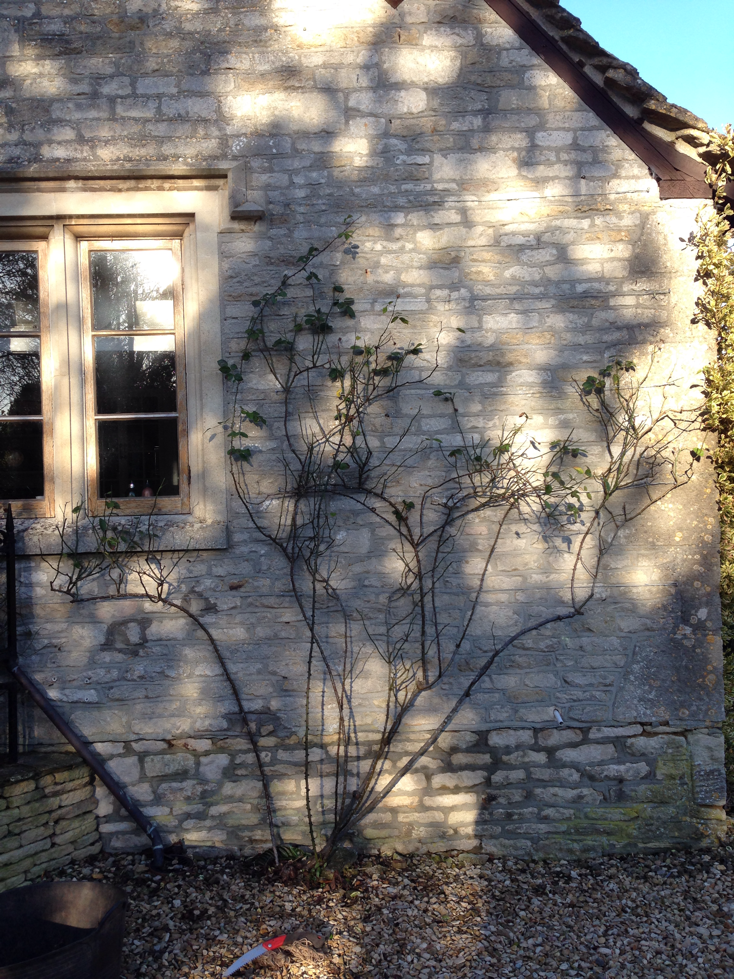
Rose pruning. Of all the garden tasks this is one of the most satisfying. I enjoy a puzzle. To take a jumble of stems and train them into a pleasing and ultimately floriferous form is immensely rewarding. 

With every year that passes, my adoration of the rose multiplies. 


A thorny mess......


........becomes an attractive arrangement......


......with just a pinch of knowledge, a few moments of thoughtful invisioning, several clean snips and careful tying-in. Without the bitter wind it would take but twenty-five minutes. With the unfriendly breeze, seemingly straight from Siberia, it took rather longer. My knots were clumsily tied because I could not bring myself to remove my gloves. It was of no consequence. The rose was successfully pruned and trained and my fingers remained toasty in my favourite winter gloves. A happy day indeed! 


Notes from a Head Gardener ~ Chapter 8 ~ All is quiet at www.nicolahope.co.uk

All is quiet on the blogpost front and I have the most marvellous excuse. I am a Royal Horticultural Society Master of Horticulture candidate. In three years time, if all goes to plan, I will be able to put the letters MHort after my name. 


Far more important than the letters is the knowledge, authority and confidence that this course will afford me. Three months in and I am surprised by how much I am enjoying academia again! The first unit, 'Horticulture Now', has sent me diving head first into research on the benefits of horticulture. The benefits are many fold. Health, both physical and mental, can be greatly improved by getting involved in gardening or even just being surrounded by green spaces. 


Reading the research is reinforcing what I already know. Being involved with horticulture on a daily basis is life enhancing. Take today for instance. A cold, dark January day. Not the most inviting, yet a few hours of rose pruning and a break in the clouds meant that by the end of my working day I was almost skipping. I cannot think of an another industry that I would rather be employed in. The Master of Horticulture course is the icing on the cake.......or rather, the hoar frost on the seed heads. I will be working my steel toe cap boots off to do the very best that I can. 


I will be blogging as much as possible. I hope that I will be so used to researching and writing that, after my course is completed, nothing will stop me spreading the horticultural word. 


Notes from a Head Gardener ~ Chapter 7 ~ The perfect garden.....almost

South Wood Farm near Honiton in Devon is a pocket powerhouse of a garden. It appears to have a little bit of everything ~ a stunning 17th century farmhouse as a focal point, a setting in a lush and peaceful valley, fabulously colourful planting in a walled courtyard, a collection of neatly clipped, many-sized topiary, a productive vegetable garden complete with sparklingly modern but traditionally styled glasshouse and coldframes, nuttery, rippling pond complete with resident frogs.....practically perfect in every way.....almost!


My visit to South Wood Farm was six weeks ago and I have been trying to write about it ever since. The problem is not what was there - the garden was stunning - there were just a couple of elements missing. My overriding feeling as I left the garden was that I had just experienced a tour of a cleverly and sensitivity designed stage set. 


Every section of the garden flowed seamlessly to the next and elicited "oohs" and "aahs" from us all at every turn. Immaculate vistas, attention to detail and use of local and rural crafts, accomplished planting and sensitively managed horticulture......but where were the surprises? The quirks? The cheekiness that makes the greatest gardens even greater? 


I really enjoyed the garden for what it was. I could appreciate the hard work and accomplished skill of designer Arne Maynard and Head Gardener Will Smithson and I would adore to spend my days working in such a gorgeous garden but I think that the anarchist in me would be itching to create at least a couple of surprises ~ a contemporary sculpture juxtaposed with traditionally clipped yew or a piece of graffiti art in the beautifully Instagrammable potting shed or against an ancient stone wall. Perhaps some unpredictable planting or an unanticipated statement plant would throw the visitor out of the fairytale trance and conjour an amused smile. Perhaps it needs the stamp of the owner to be more prominently stamped. 


When you adore a garden so much that you really want to drop everything and work there for no wage today but, at the same time, want to twist and manipulate some of it's perfectness..... what is that? A garden that is a whisker away from being truly great. I look forward to visiting again to see how South Wood Farm has developed. It can only get more impressive 


Notes from a Head Gardener ~ Chapter 6 ~ On the importance of garden visits 12/9/2017

Making the time to visit gardens a few times a year is of vital importance to a professional gardener. It is not always easy to fit it in, especially during the busiest gardening months but, even if you leave your garden kicking and screaming and in the foulest of moods, I can guarantee that most garden visits will replace time lost with inspiration and bring a fresh eye to the gardens in your charge. 


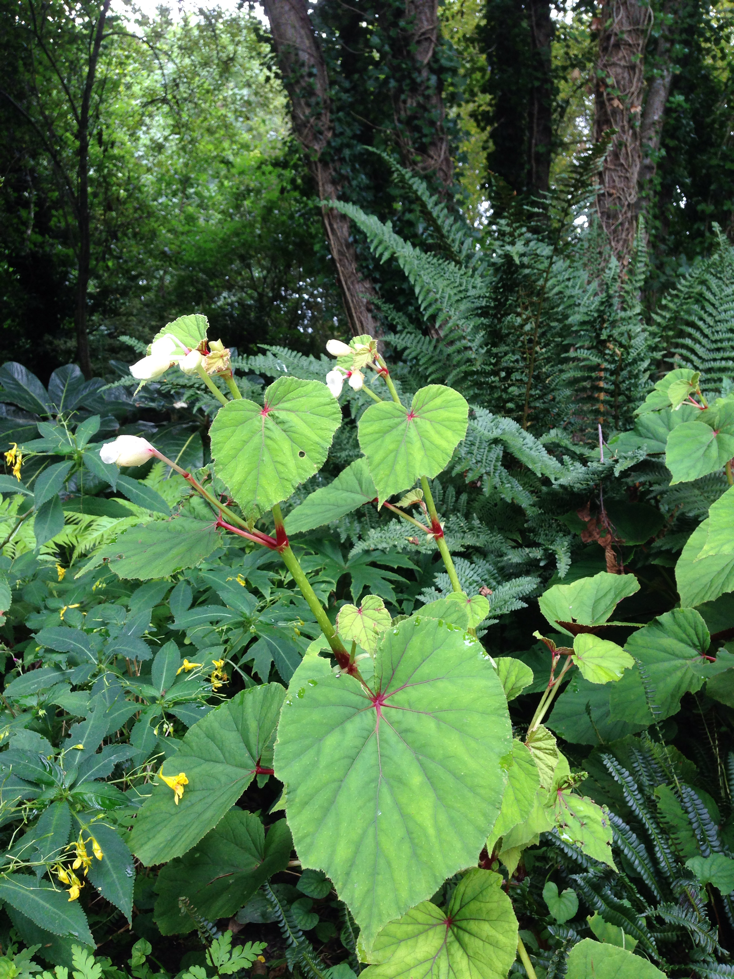
Last month I was very fortunate to be invited along on a jolly down to Devon to visit two mindblowingly different gardens. We spent the morning at Little Ash Bungalow ~ a paradise of rare, unusual and excitingly new plants, this garden is the site of a well loved collection belonging to Helen Brown. Helen is truly passionate about collecting all the plants that excite her. This could result in a garden that lacks flow but simple landscaping and a particular liking for purple foliage conspire to lead the eye around the garden. Of course, anyone visiting with any plant knowledge will be drawn towards the exciting plants. I was particularly enamoured of the woodland area towards the bottom of the garden. It is wonderfully damp down there. Perfect for many ferns, gorgeous Roscoeas......


.....and fabulous, hardy, shade loving Begonias! I have finally met a Begonia that I could get along with.......


Helen was welcoming and generous with her extensive knowledge. The horticultural world is populated with such people. The willingness to share is heartening and motivating. It is why I know that I will always be a part of the horticultural world and I will strive to retain as much knowledge as I possibly can so that I, in turn, can pass it on. 


The iridescent species Dahlia merckii glowing in the garden at Little Ash Bungalow. 

The second garden that we visited deserves its very own blogpost but here is a sneaky taster of the spectacle that we were treated to after lunch.....


Notes from a Head Gardener ~ Chapter 3 ~ The Big Smoke 25/6/2017

Competition Winner! That was me this week. I won a ticket to The House and Garden Festival out of the blue (well, I did enter a competition but one does not expect to win) and had two days to organise a day trip to London. I was undecided whether or not I would go right up until the last minute. I had a free day but, as we all do at this time of year, I had hundreds of tasks in and around the garden that I really ought to prioritise. But shouldn't one make inspiration a priority?


Prospective inspiration won. I hopped on a train and headed solo towards The Big Smoke. London is inspiring in itself for a country dweller and I have resolved to go much more often. It is easy, when one has a business and young children, to dedicate all of ones time to only these pursuits but a break from the norm is important. The show was sumptuous - divided by two separate floors - the ground floor dedicated to interiors, fashion and gifts and upstairs, a space for growers, garden designers, craftspeople and outdoor innovations. 


Talking with people who have a strong belief in their product or service is brilliant because their enthusiasm is contagious. Showing a professional interest in the stand holders is a good thing to do because one gets professional interest in return. A mutual confidence boosting exercise.


The truth is that I have made the journey to London twice in this past week. The first trip was for non-horticultural reasons (Guns n Roses you rocked!) but a chance meeting with a delightful and very trendy journalist / Instagrammer made the mini-break even more special. Alice Vincent, otherwise known as @noughticulture, was extremely sweet and full of spot-on tips to help this country mouse discover some of London's lesser known horticultural gems. I was particularly taken with the planting at the Olympic Park in Stratford. The plants were flowering well in advance of anything in the Cotswolds. It was rather like being abroad......but only an hour or so away by train. This bumpkin is suitably inspired. 


Introducing Aubrey the Leveret ~ The Cirencester Town Council and Tourist Information Centre small hare ~ 20/6/2017

This is Aubrey the Leveret. He is Lavender the Fosseway Garden Centre Hare's little brother and he is living in Cirencester Tourist Information Centre this summer on The Cotswold Hare Trail 2017. 


Aubrey the Leveret is sponsored by Cirencester Town Council. They wanted me to endeavour to show the connection between the town and its lovely, green open spaces. I hope that I have managed to capture some of the bustle of Cirencester Town and the wilderness of its surroundings. 


Aubrey has a scene of Cirencester Farmers Market on his rear. The impressive architecture of Cirencester's historic centre is depicted including the stunning Church of St. John the Baptist. The market is packed full of delicious wares and happy shoppers (there is even a tiny leveret hidden amongst the stalls). 


The market scene merges into wildflowers. There are native ferns, wild geraniums, forget-me-nots, cowslips, bluebells and the star of the show, depicted on Aubrey's front legs, the Southern Marsh Orchid. All of these beautiful plants can be found amongst the open green spaces of Cirencester and it's surrounds. 


As a horticulturalist and an artist it is very important for me to promote the special areas where these wildflowers can be found. The very observant might even spot one of our stunning native orchids. Green spaces and all the flowers that dwell in them support lots of wildlife including hares. 


I have been thrilled to support The Cotswold Hare Trail 2017. It is a great way to see parts of the Cotswolds that may be previously unknown to you and a wonderful way to get young people excited about destinations both historical and modern. 


Notes from a Head Gardener ~ Chapter 2 ~ Topiary Trials and Triumphs ~ 19/6/2017

Topiary is my number one and longest standing skill. It is my party trick and if it were an Olympic sport I would hope to represent Great Britain (probably to be edged out of the Gold medal winning position by Jake Hobson but trouncing the boys at Warner Trees to ultimately take silver 🥈). 
This is a daydream caused by extreme heat but I am very experienced and pride myself on being a confident topiary artist. 


So, last week, when faced with the twice-yearly trim of the yew pyramids pictured above I had two choices: spend eight hours trimming them by hand with my excellent Niwake hand shears or fire up the brand new Stihl lighter-than-air (for five minutes or so and then it gets a bit weightier) hedge trimmer and save four hours of precious June gardening time. I chose the hedge trimmer for the very first time. I was nervous. What if I sneezed and took the end of my nose off or, worse still, the top of a pyramid? I need not have worried. By pyramid number 6 I had my technique almost perfected and after I had completed the final one, number 7, I wanted to go straight back to number 1 so that I could iron out any slightly less than perfect bits. 


I thought better of this almost immediately. The beauty of topiary is that (barring aforementioned sneezing incidents) the foliage will start to grow back very shortly after the trim. These yew pyramids will be needing their second trim at the far end of the summer so that they stay looking sharp throughout Autumn and Winter. This is when I can get them looking spot-on perfect. In theory there will be more time at the end of the summer. In practice I seem to be fairly flat out for much of the year. I wouldn't have it any other way.....it keeps me out of mischief! 

Wildflower Walks with my Girls ~ 11/6/2017

Leaving the house after an evening meal is not easy nowadays. I would much rather collapse in a heap on a sofa and wait for a cat to come and sit on me but when my sister suggested that we go for a family wildflower walk to see what we could see in the fields that surround Malmesbury, I called upon my emergency energy reserves and off we went. 


What a good idea it turned out to be and what beauties we found! My eight and five year old daughters kept records of the flowers that we saw and by the end of our walk we had filled pages and pages. We found over 40 different species of flowering plants. Favourites included flag irises, campion, rose bay willow herb, geraniums, clovers, hemlock but the star flower that lit up a overcast evening was the sighting of several stunning bee orchids (Orphys apifera) in the nature reserve. 


The girls enjoyed the competition of writing down plants before the other one. The grown 
-up girls enjoyed the evening leg stretch and the chance to swot-up on our wild flower knowledge. My mother found a pretty burgundy flowered plant that she recognised but couldn't name. After much googling we hit the target and identified Hedge Woundwort. Quite possibly my new favourite wild flower and one that I hope I will never forget.....until next years wildflower walk with my favourite females. 


Notes from a Head Gardener ~ Chapter 1 ~ Know your Space ~ 5/6/2017

Know your space

You are embarking upon an exciting project. There is no end to this project and that is something that you must realise. A garden is a living, breathing, ever-evolving outside space. Even the lowest maintenance garden will require some sprucing up a few times a year. The sooner that this is viewed as an exciting opportunity to change the garden onto which you look or walk through the better. The role of Head Gardener is pretty awesome. 


Being the Head Gardener of your own garden gives you the creative freedom to have the garden of your dreams. Whether you crave a productive and beautifully symmetrical vegetable garden like the one above at the stunning Yeo Valley Organic Garden in Somerset or a more informal but wonderfully scented and colourful garden to encourage bees and other pollinating insects, rather like my own here......


......as Head Gardener you must first go out and visit other gardens for inspiration. Join The Royal Horticultural Society and you can visit hundreds of gorgeous gardens for free. Whilst you are taking time to visit gardens and collecting ideas, keep a scrapbook or online pin board with photographs of scrumptious plants and clever landscaping. Make notes detailing exactly why you liked these gardens, how and where they would fit into your own garden and all the while keep dreaming. 


I was utterly bowled over by the plant combinations in the Bronze Garden at The Yeo Valley Organic Garden (can you tell that it was my favourite garden visit of the Spring?!) and I am already forming an image of how I can have a bronze area in my own garden or suggest it to one of my clients. 


During your allocated garden visiting time - and I would suggest that this period lasts for one year because you will see plants that flower or hold some form of interest (colour/texture/form/scent) in every season - you must observe your own space. Take a cane  with a brightly coloured string bow tied to it and thrust it into the ground next to all of the plants that you want to keep - you may think that you will remember that clump of pheasant-eye narcissi but it is easy to forget once they have died back completely. Likewise, the shrub that lights up midwinter when everything else looks miserable.....give it a cane. This is another reason why I suggest that a year of dreaming, planning and visiting should be the first stage of your Head Gardenership. 


A wonderful pot of tulips at Dyrham Park near Bath, Spring 2017.